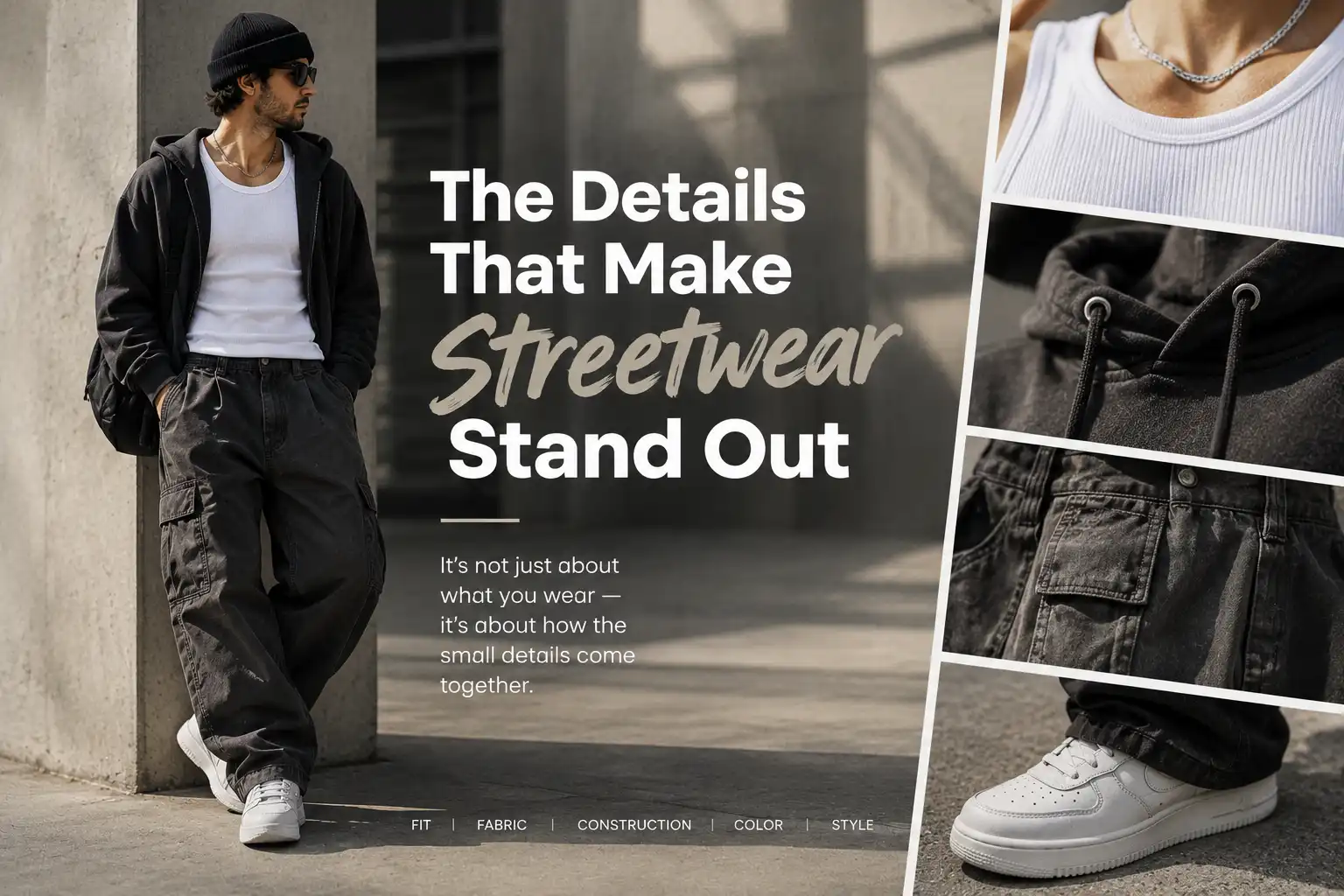
Great streetwear does not always demand attention. Sometimes, what makes an outfit memorable is something you notice only after looking a little closer. It might be the way a garment falls across the shoulders, the texture of the fabric, the shape of a neckline, or the relationship between different pieces.
These details can make a significant difference.
Streetwear has developed into a style that embraces everything from oversized silhouettes to understated essentials. While bold graphics and recognizable designs still have their place, many people are discovering the appeal of clothing that makes an impression through its construction, fit, and overall appearance.
The result is a more considered approach to everyday dressing.
Rather than focusing exclusively on individual products or passing trends, this approach considers what makes a garment worth wearing repeatedly. It looks at how clothing feels, how it fits into a wardrobe, and how small design decisions influence the final outfit.
Understanding these details can help anyone develop a more distinctive personal style.
Why Small Details Matter in Streetwear
When choosing clothing, it is easy to focus on the obvious features first. Color, graphics, and general appearance tend to attract attention immediately.
However, the smaller details often determine whether a garment becomes a regular part of your wardrobe.
Consider two basic T shirts. At first glance, they might appear almost identical. Both could have a simple design and a similar color. Yet differences in the neckline, sleeve length, fabric weight, and overall cut can make them feel completely different when worn.
These differences influence how the garment looks on the body and how easily it works with other pieces.
Construction Influences Appearance
Construction plays an important role in the way clothing sits.
The relationship between the shoulders, sleeves, body, and hem determines the overall silhouette. Even a straightforward garment can look distinctive when these elements work together.
A well balanced shape can make a simple outfit feel intentional without requiring additional accessories or decorative features.
This is particularly useful in streetwear, where silhouettes frequently contribute as much to an outfit as the garments themselves.
Simplicity Reveals More
When a garment has very few decorative elements, its construction becomes more noticeable.
There are fewer graphics or patterns competing for attention, so the cut and proportions have a greater influence on the overall appearance.
This is one reason minimalist clothing can be surprisingly expressive. Its character comes from the way it is designed and worn rather than from the number of details added to it.
Fabric Changes the Character of an Outfit
Fabric is one of the most important considerations when evaluating clothing.
Two garments with similar designs can create entirely different impressions because their materials behave differently.
Some fabrics drape naturally around the body. Others hold their shape and create a more structured appearance. Certain materials feel lightweight and breathable, while heavier fabrics can provide a more substantial silhouette.
These characteristics influence both comfort and styling.
Lightweight Fabrics for Everyday Dressing
Lightweight garments are useful when comfort and ease of movement are priorities.
They can work particularly well in warm weather or as the foundation of a layered outfit.
A lightweight tank, for example, can be worn independently or underneath an open shirt. Because it does not necessarily add substantial bulk, it can work with different outer layers and trouser styles.
The key is considering how the fabric behaves alongside the other garments.
Heavier Fabrics Create Structure
Heavier materials can introduce a different visual character.
A substantial hoodie may create a fuller silhouette, while a structured jacket can provide definition to an otherwise relaxed outfit.
When combining garments with different fabric weights, consider how they interact.
A heavier outer layer can work well over a relatively lightweight base. This creates a practical combination without requiring every piece to have the same physical presence.
The Importance of a Well Considered Fit
Fit is not simply a question of whether clothing is tight or loose.
It involves understanding how a garment’s proportions work with your body and the rest of your outfit.
Modern streetwear embraces a wide range of silhouettes, including oversized tops, relaxed trousers, fitted basics, and cropped outer layers.
Each option creates a different visual effect.
The most effective choice depends on the style you want to achieve.
Relaxed Does Not Mean Careless
Relaxed clothing can create an effortless appearance, but the individual proportions still matter.
An oversized top should work with its sleeve length, body width, and hem position. Similarly, relaxed trousers should create a silhouette that feels deliberate rather than accidental.
This does not mean every garment needs to fit perfectly according to traditional tailoring standards.
Streetwear often plays with unconventional proportions.
The important distinction is between a shape that has been chosen intentionally and one that simply does not work for the wearer.
Find the Right Relationship Between Pieces
A garment rarely exists in isolation.
A wide T shirt paired with straight trousers creates a different result from the same shirt worn with very wide bottoms.
Likewise, a fitted tank can balance a roomier pair of trousers, while a loose outer layer can introduce volume to a relatively simple base.
Experimenting with these relationships allows you to develop a recognizable style without depending on complicated outfits.
Necklines and Sleeves Deserve More Attention
Necklines and sleeves may appear to be minor design elements, but they influence the character of a garment.
A crew neckline creates a familiar, straightforward appearance. A wider neckline can introduce a different visual proportion. Sleeveless designs expose more of the shoulders and arms, creating a lighter silhouette than a conventional short sleeve.
These differences can influence how the garment works with accessories and additional layers.
Choosing the Right Sleeveless Silhouette
Sleeveless tops offer a practical option for people who want a simple upper layer without the additional coverage of sleeves.
Their appearance depends on several factors, including the neckline, shoulder opening, body length, and overall fit.
Some designs create a fitted athletic appearance. Others offer a more relaxed shape suited to casual everyday dressing.
A simple piece such as the Man Beater can provide a foundation for different styling combinations, depending on the trousers, footwear, and additional layers chosen.
The important consideration is how the garment fits into the complete outfit rather than treating it as a standalone purchase.
Color Can Highlight Design Details
Color influences how people perceive the shape and texture of clothing.
Neutral shades often make it easier to appreciate the silhouette because they create fewer visual distractions. Darker colors can produce a more understated appearance, while lighter shades can make the details of a garment more noticeable.
Neither approach is inherently better.
The best choice depends on the role the garment will play in your wardrobe.
Build Around a Consistent Color Palette
A consistent color palette makes it easier to combine different garments.
For example, black, white, grey, and cream can provide a versatile foundation for everyday streetwear. These colors can be combined with earth tones or stronger accents when you want additional variety.
This approach also makes small design differences easier to appreciate.
When the color palette remains relatively simple, variations in texture, cut, and proportion can provide much of the visual interest.
Why Versatile Basics Remain Important
A wardrobe filled entirely with statement pieces can make everyday dressing unnecessarily difficult.
Distinctive garments often work best when they have complementary pieces around them. Without those foundations, creating balanced outfits can become challenging.
Versatile basics help solve this problem.
They provide reliable starting points that can be styled in several different ways.
A straightforward tank can work with relaxed trousers, an open overshirt, or a jacket. A simple T shirt can be worn independently or incorporated into a layered combination.
The value lies in flexibility.
Think About Cost Per Wear
One useful way to evaluate clothing is to consider how frequently you expect to wear it.
A garment that works across several outfits may offer greater practical value than one that only suits a single occasion.
This does not mean every purchase must be justified through calculations. Clothing should still be enjoyable, and distinctive pieces can have a place in any wardrobe.
However, considering versatility can help you make more thoughtful choices.
Before purchasing something, ask yourself whether it works with pieces you already own and whether you can imagine wearing it regularly.
Texture Adds Depth Without Extra Decoration
Not every outfit needs graphics, bold colors, or statement accessories.
Texture can create visual interest while keeping the overall appearance relatively simple.
For example, a smooth cotton top can contrast with textured trousers. A soft base layer can sit beneath a structured jacket. Different fabric finishes can introduce subtle variation even when the garments share a similar color.
This creates depth without making the outfit feel crowded.
Combine Textures With Intention
The goal is not to include as many different materials as possible.
Instead, choose combinations that complement one another.
If the main garment already has a substantial texture, simpler pieces can help balance the outfit. If everything is smooth and understated, introducing one contrasting material can create additional interest.
These decisions become particularly useful when working with a limited color palette.
How Layering Reveals the Quality of Styling
Layering can transform basic garments into a more developed outfit.
It creates opportunities to combine different lengths, shapes, and textures while allowing individual pieces to remain visible.
However, effective layering requires some consideration.
Adding multiple garments without thinking about their relationship can create unnecessary bulk. The result may feel uncomfortable or visually unbalanced.
Start With a Simple Foundation
Begin with a base layer that feels comfortable and works with the rest of the outfit.
Next, introduce an additional garment that contributes something useful. It might provide warmth, introduce a different texture, or change the silhouette.
Finally, consider whether another layer is actually necessary.
Sometimes two well chosen garments create a stronger result than three or four pieces competing for attention.
Consider the Length of Each Layer
The relationship between garment lengths can create a distinctive silhouette.
A slightly longer base layer beneath a shorter jacket introduces a visible contrast. A longer outer layer can create a more continuous vertical line.
These small decisions influence the overall appearance without requiring dramatic changes to the clothing itself.
Accessories Should Complement the Garments
Accessories can add personality, but they work best when they support the direction of the outfit.
A watch, cap, chain, bag, or pair of sunglasses can introduce a finishing detail without changing the basic silhouette.
However, accessories cannot always compensate for garments that do not work well together.
Start by getting the main clothing combination right.
Once the fit, color, and proportions feel balanced, accessories can provide an additional layer of personal expression.
A restrained approach often makes individual details more noticeable.
Building a Wardrobe Around Your Own Preferences
The most useful wardrobe is one that reflects how you actually like to dress.
You might prefer relaxed silhouettes and heavier outerwear. You might gravitate toward fitted basics and clean trousers. You might enjoy experimenting with layering or keeping most outfits simple.
These preferences should influence your decisions.
Instead of purchasing garments simply because they are popular, consider whether their design characteristics suit your existing style.
Recognize What You Wear Repeatedly
Pay attention to the garments you reach for most frequently.
Notice their common features.
Perhaps you consistently choose neutral colors, sleeveless tops, relaxed trousers, or uncomplicated designs.
These patterns can help you identify which characteristics matter most to you.
Once you understand those preferences, it becomes easier to find garments that work together.
Your wardrobe becomes more cohesive because individual purchases support a consistent direction.
Clothing Does Not Need to Be Complicated to Be Distinctive
One of the most appealing aspects of modern streetwear is its ability to make simple garments feel expressive.
A basic top, relaxed trousers, and clean sneakers can create a strong outfit when their proportions and colors work together.
The same combination can feel completely different with a change of footwear, an additional layer, or a different silhouette.
This is where personal styling becomes valuable.
Rather than relying on a new statement piece for every outfit, you learn how to use familiar garments in different ways.
A straightforward option such as the Classy Tank can serve as part of this approach, providing a simple foundation for outfits that change according to your preferred proportions and layers.
The garment remains uncomplicated while the styling possibilities remain open.
Final Thoughts
The details that make streetwear stand out are not always the ones that attract attention first.
Fabric, construction, fit, proportion, texture, and garment length all contribute to the final appearance. Together, they determine how individual pieces work with one another and how an outfit expresses personal style.
Understanding these elements can help you make better wardrobe decisions without constantly searching for something new.
Start by paying attention to the garments you already enjoy wearing. Notice what makes them comfortable, versatile, and easy to style. Experiment with different combinations and observe how small changes affect the overall silhouette.
Over time, you will develop a clearer understanding of what works for you.
Streetwear does not need to be complicated to make an impression. Sometimes the strongest outfits come from simple pieces chosen carefully and worn with confidence.
The difference is in the details.